Best Wave Riding Camps United States: A Complete Guide
Selecting an instructional environment for ocean navigation requires balancing physical mechanics, coastal geography, and personal goals. Ocean conditions vary widely across regions. Waves behave differently on shallow beach breaks, deep cobblestone points, and shifting sandbars. Choosing a camp involves more than comparing prices or locations.
Participants must navigate regional surf conditions, seasonal swell patterns, and varying coaching structures. Some programs focus on foundational mechanics for beginners. Others use video review, land-based movement training, and open-ocean safety to help experienced surfers improve.
This guide breaks down how wave riding camps operate across the country. It covers regional differences, coaching methods, safety systems, and decision-making frameworks. These insights help surfers choose a program tailored to their experience level and long-term goals.
Understanding “best wave riding camps united states”
Evaluating the best wave riding camps united states requires looking beyond promotional claims. Quality instruction depends on environmental factors, coaching methods, and safety protocols. A program that excels for a beginner in gentle whitewater may not suit an advanced surfer working on line selection.
Misinterpreting Location Advantages
Regions famous for world-class waves do not always offer the best learning environments. Heavy, fast-breaking waves can intimidate developing surfers and shorten practice time. Beginners often progress faster on forgiving, long-period waves with sand bottoms.
The Problem with Fixed Daily Schedules
Ocean conditions change with tides, wind patterns, and swell directions. Camps running on rigid, clock-based schedules often force students into sub-optimal conditions. Adaptable programs adjust session times to match favorable tides and winds, optimizing learning time.
Instructor Ratios versus Coaching Quality
Low student-to-instructor ratios do not guarantee effective instruction. An inexperienced guide holding a board in the whitewater provides limited value. Meaningful coaching relies on structured real-time feedback, biomechanical breakdown, and ocean literacy lessons.
Over-Reliance on Equipment
High-performance surfboards cannot substitute for core technique. Camps that push shortboards too early often slow down student progress. Proper programs match board volume and shape to the surfer’s balance, paddling endurance, and wave-reading ability.
Deep Contextual Background
Coastal instruction in the United States evolved from informal coastal lifestyle teaching into structured physical education. In the mid-twentieth century, surfing instruction was largely peer-to-peer. Local surfers shared unwritten rules, line-up etiquette, and wave-reading skills informally on the beach.
As coastal populations grew, informal learning created friction in crowds. Inexperienced surfers often struggled with ocean hazards and etiquette. By the late 1980s, dedicated surf schools appeared across Southern California, Hawaii, and the East Coast. Early programs focused primarily on basic popping up and ocean safety.
The 2000s marked a transition toward systematic athletic development. Camps integrated video analysis, pool training, and functional movement assessments into their programs. Regional coastal regulations also formalized safety standards, requiring certified instructors, permits, and structured risk management. Today, the industry blends oceanography, exercise science, and video analysis to deliver structured skill progression.
Conceptual Frameworks and Mental Models
Navigating an immersive ocean camp requires clear mental frameworks to process dynamic conditions.
The Energy-Bathymetry Matrix
Wave energy transforms as deep-ocean swells interact with coastal seabed topography (bathymetry).
-
Beach Breaks: Shifting sandbars create variable, fast-closing waves. They build quick reaction times but offer short rides.
-
Point Breaks: Headlands peel waves predictably over rock or sand. They provide long, uniform canvas for refining turns.
-
Reef Breaks: Deep-water energy trips abruptly over stationary rock or coral. They deliver high wave power and distinct takeoff zones, requiring precise positioning.
Understanding this framework helps surfers choose a camp location that matches their operational skills.
The Biomechanical Stacking Model
Successful wave riding relies on sequential movement. Surfers must execute each physical step in order before moving to the next.
Attempting complex maneuvers without mastering stance stability causes technical errors. Top instructional camps build motor patterns systematically, preventing poor habits from taking root.
The Dynamic Ocean Literacy Triad
Surfer safety and performance depend on three interconnected factors:
-
Reading Currents: Identifying rip currents, sweeps, and channels to conserve energy.
-
Swell Timing: Calculating set intervals and lull periods to navigate the lineup safely.
-
Lineup Etiquette: Understanding priority rules to prevent collisions and maintain crowd harmony.
Camps that focus solely on physical pop-ups without teaching ocean literacy leave students dependent on guides.
Key Categories or Variations
Wave riding programs vary significantly based on their primary instructional goals.
High-Performance Technical Coaching
Designed for intermediate and advanced surfers focused on maneuver execution, speed generation, and line selection.
-
Primary Tools: High-frame-rate video breakdown, radio-equipped helmets, and land-based skate training.
-
Trade-Offs: Highly demanding physically; less focused on general ocean relaxation.
Educational Youth Foundations
Focuses on long-term athletic growth, ocean safety, and environmental awareness for younger surfers.
-
Primary Tools: Small group land-to-water ratios, soft-top board fleets, and structured games.
-
Trade-Offs: Slower skill progression due to group dynamics and shorter sessions.
Adult Immersion Programs
Structured for adults seeking accelerated learning during dedicated travel windows.
-
Primary Tools: Video analysis, dry-land mobility sessions, and video-documented daily debriefs.
-
Trade-Offs: High physical fatigue over consecutive multi-session days.
Specialized Wave Pool & Micro-Climate Programs
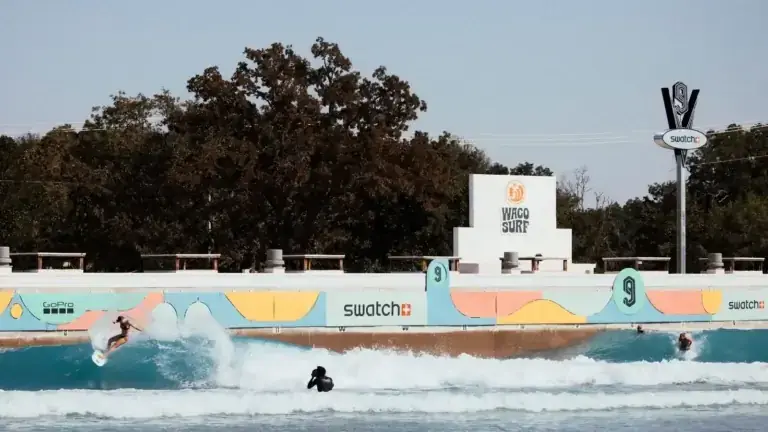
Utilizes artificial wave lagoons or sheltered coves for controlled, repeatable learning environments.
-
Primary Tools: Identical, customizable wave profiles and stable conditions.
-
Trade-Offs: Lacks real-ocean variable practice, such as reading unpredictable swells and navigating currents.
Camp Model Comparison
Detailed Real-World Scenarios
Scenario 1: The Intermediate Plateau
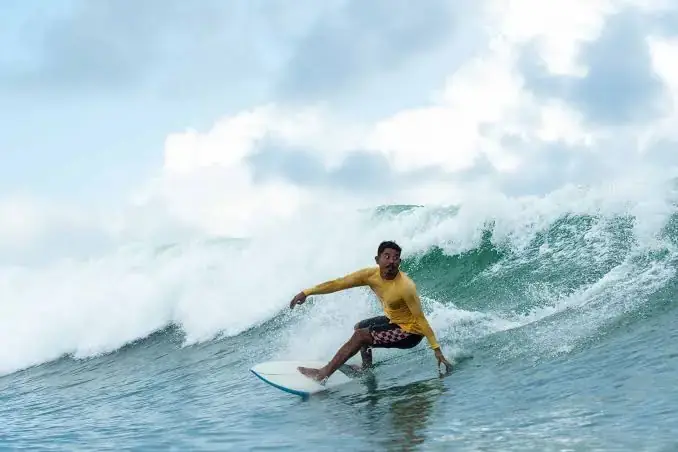
A surfer stuck at the intermediate stage can ride open green waves but struggles to generate speed or perform cutbacks.
-
Root Cause: Inconsistent pop-up foot positioning and poor weight distribution on the board’s centerline.
-
Camp Strategy: Film sessions from shore using telephoto lenses. Review stance and arm positioning frame-by-frame during mid-day debriefs.
-
Second-Order Effects: Adjusting foot placement temporarily lowers wave count, but creates a cleaner platform for turns over time.
Scenario 2: Transitioning from Gulf Coast to Pacific Swells
A surfer used to short-period Gulf or East Coast wind-swells attends a camp on the Pacific Northwest coast.
-
Root Cause: Pacific groundswells feature longer wave periods, higher speeds, and stronger ocean currents.
-
Camp Strategy: Focus on entry timing, duck-diving technique, and navigating deep-water channels.
-
Second-Order Effects: Paddling fatigue sets in quickly. Instructors shift focus toward breath control and conserving energy in the lineup.
Scenario 3: Overcoming Ocean Anxiety After Injury
A former surfer returning after a physical injury struggles with anxiety in overhead wave conditions.
-
Root Cause: Loss of confidence in paddling strength and panic responses during hold-downs.
-
Camp Strategy: Use sheltered point breaks to manage wave size. Rebuild confidence through controlled breathwork, jet-ski support, and clear entry/exit plans.
-
Second-Order Effects: Slower technical progress initially, but builds long-term psychological resilience.
Planning, Cost, and Resource Dynamics
Budgeting for a wave riding camp involves more than just tuition fees. Travel expenses, seasonal rental gear, physical preparation, and opportunity costs all impact total investment.
Direct Costs
-
Tuition: Covers instruction, venue access, and administrative fees.
-
Equipment Rental: High-performance demo boards, wet-suits, and safety gear.
-
Lodging and Transport: On-site accommodations versus independent stays near break points.
Indirect Costs
-
Pre-Camp Conditioning: Gym memberships, swimming sessions, or mobility training prior to attendance.
-
Recovery Needs: Massage therapy, physical therapy, and nutritional supplements during intensive multi-day camps.
-
Opportunity Costs: Time taken away from work or personal projects.
Cost Variance Across U.S. Regions
Tools, Strategies, and Support Systems
Modern camps use a range of technical tools and training methods to accelerate learning.
-
Frame-by-Frame Video Review: High-definition video captures subtle technical errors, like incorrect arm placement or stiff hip rotation, that are hard to feel in real time.
-
Two-Way Helmet Radios: Allows coaches to give real-time feedback while a student is riding or positioning for a wave.
-
Smooth-Surface Carver Skateboards: Simulates wave turns on flat land, helping students build muscle memory for carving and weight transfer.
-
Pool and Breathwork Sessions: Teaches students how to stay calm during wave hold-downs, building confidence in larger surf.
-
Surf-Specific Fitness Assessments: Identifies physical limitations in shoulder mobility or thoracic extension that slow down paddling efficiency.
-
Dynamic Ocean Mapping Apps: Uses real-time buoy data, wind models, and bathymetry maps to help students understand daily spot selection.
Risk Landscape and Failure Modes
Ocean environments carry inherent physical risks. High-quality camps use structured safety protocols to manage hazards effectively.
Coastal Hazard Categories
Compounding Risks in Group Settings
Failure to assess group fitness levels can quickly cause safety issues. If one student drifts into a rip current, instructors must divert focus away from the rest of the group. Reliable camps maintain strict student-to-instructor ratios and establish clear safety protocols on the beach before entering the water.
Governance, Maintenance, and Long-Term Adaptation
To get long-term value from a wave riding camp, surfers need structured post-camp integration plans. Returning home without a practice routine often leads to losing newly acquired habits.
Long-Term Adaptation Checklist
Phase 1: Immediate Post-Camp Audit (Days 1–7)
-
Archive and organize all personal coaching video files.
-
Document three core mechanical adjustments highlighted by coaches.
-
Match current surfboard volume against progression milestones.
Phase 2: Local Conditioning & Land Training (Weeks 2–6)
-
Perform thoracic mobility and pop-up drills twice weekly.
-
Practice carving mechanics on flat land using a surf skate.
-
Maintain cardiovascular endurance through swimming or interval training.
Phase 3: Home Break Integration (Month 2 Onward)
-
Apply wave-reading skills to assess local tide and swell patterns.
-
Focus on one technical goal per session, avoiding cognitive overload.
-
Review video footage periodically to check for returning bad habits.
Measurement, Tracking, and Evaluation
Tracking progress in dynamic ocean conditions requires looking beyond simple metrics like total waves caught.
Sample Documentation Record
Metric Record A: Pop-Up Efficiency
-
Baseline: 4 out of 10 pop-ups land with front foot centered along the stringer.
-
Post-Camp Target: 8 out of 10 pop-ups land cleanly in a wide, balanced stance.
-
Measurement Method: High-speed camera footage evaluated frame-by-frame.
Metric Record B: Wave Selection Accuracy
-
Baseline: Catches 3 clean green waves per hour; paddled for 7 closing or unrideable waves.
-
Post-Camp Target: Catches 6 clean green waves per hour; misses fewer than 2 due to poor positioning.
-
Measurement Method: Session log tracking total paddle attempts versus completed rides.
Common Misconceptions and Oversimplifications
-
Myth: Bigger Waves Always Lead to Faster Progress.
-
Reality: Overly large or heavy waves often trigger fear responses, causing stiff movements and defensive riding. Forgiving, smaller waves offer more time to practice correct mechanics.
-
-
Myth: You Can Master Surfing in a Single Week.
-
Reality: A one-week camp builds awareness, corrects major faults, and provides a clear practice framework. Building deep muscle memory takes months of consistent local practice.
-
-
Myth: Elite Surfers Are Automatically Great Coaches.
-
Reality: Professional riding ability does not guarantee clear teaching skills. The best coaches excel at breaking down complex physical movements, communicating clearly, and analyzing video footage.
-
-
Myth: Soft-Top Boards Are Only for Complete Beginners.
-
Reality: Modern high-performance soft-tops help intermediate surfers practice new turns safely without risking injury or board damage in crowded lineups.
-
-
Myth: Fitness Equipment Can Replace Ocean Time.
-
Reality: Land-based workouts build strength, mobility, and stamina. However, they cannot replace the ocean literacy needed to read real swells, tides, and wind shifts.
-
Ethical, Practical, or Contextual Considerations
Managing Crowds and Respecting Local Breaks
Surf tourism can strain fragile coastal communities and overcrowd local breaks. Responsible camps teach lineup etiquette, respect local surfers, and avoid bringing large groups into sensitive or high-density surf zones.
Coastal Environmental Stewardship
Coastal ecosystems are vulnerable to water pollution, dune erosion, and habitat damage. Quality programs emphasize environmental care by teaching beach conservation, supporting local ecology initiatives, and minimizing plastic waste during operational trips.
Conclusion
Choosing the right wave riding camp in the United States comes down to matching your personal goals with regional ocean conditions and instructional styles. Broad claims matter far less than structured coaching, low student-to-instructor ratios, and adaptability to daily tide and swell changes.
Real progression requires looking at the big picture. Physical technique, ocean literacy, video analysis, and safety protocols must all work together. By evaluating camps through this practical framework, surfers can invest in programs that deliver lasting skills, confidence, and ocean awareness long after the camp ends.