Top Surfing Camp Selections: Comprehensive Analytical Guide
Selecting an optimal wave-riding instructional environment requires navigating a complex web of environmental, logistical, and pedagogical factors. Ocean sports travelers face an increasingly saturated commercial marketplace. Identical marketing imagery and uniform promises of rapid athletic progress dominate the current landscape.
What appears on the surface as a simple choice between coastal resorts actually involves critical trade-offs in physical safety, biomechanical progression, and geographical alignment. A facility located near a sheltered, shallow sandbar serves a fundamentally different purpose than an outpost accessing heavy offshore reef breaks via boat transfers.
Evaluating these offerings demands an objective framework rather than reliance on subjective consumer feedback. Travelers must examine instructor-to-student ratios, watercraft support systems, bathymetric profiles, and video motion-capture capabilities. Without a systematic analysis, surfers risk selecting programs that hinder movement patterns, fail to teach ocean literacy, or compromise safety in heavy conditions.
Understanding Top Surfing Camp Selections
Evaluating top surfing camp selections requires breaking down marketing promises into verifiable technical metrics across instructional design, safety infrastructure, and geography.
Core Analytical Dimensions
Assessing an athletic training facility involves evaluating three core operational domains:
-
Pedagogical Structure: The presence of a phased curriculum that separates dry-land biomechanics from wave navigation and lineup etiquette.
-
Safety Protocols: Maintaining certified ocean lifeguards, formal emergency action plans, and dedicated watercraft support systems.
-
Geographic Alignment: Choosing locations featuring predictable seabed features, manageable tidal currents, and suitable wave profiles.
Misunderstandings in Program Evaluation
The Hospitality Trap
A primary misunderstanding when travelers evaluate top surfing camp selections is confusing high-end hospitality with superior instruction. Gourmet dining and luxury villas do not guarantee structured coaching or certified ocean rescue capabilities.
Misinterpreting Wave Size
Another common oversight involves judging facilities by regional swell size rather than local wave quality and consistency. Large ocean swells create hazardous conditions for intermediate surfers, whereas predictable, gentle wave faces offer superior learning environments.
Deep Contextual Background
The evolution of surf instruction reflects broader shifts in sports science, tourism infrastructure, and coastal resource management over several decades.
The Informal Outpost Era
Prior to the 1980s, surf travel operated through informal outposts catering primarily to self-sufficient watermen seeking remote waves. Accommodations were basic, meals were simple, and structured instruction was virtually non-existent.
Learning occurred strictly through trial and error. Water safety depended on individual swimming strength rather than organized lifeguard supervision.
Commercial Expansion and Standardization
During the 1990s and early 2000s, growing interest in active travel accelerated the commercialization of coastal locations. Tour operators began offering structured group lessons alongside standard beach accommodations.
Early expansion prioritized high client volume over instructional depth. High student-to-instructor ratios and basic safety gear dominated early operations, eventually triggering regulatory changes in key regions.
Modern Professional Academies
Rising insurance requirements, municipal oversight, and sports science integration transformed the industry over the last two decades. Modern facilities function as specialized athletic training centers.
Programs now feature video motion analysis, radio headsets, land simulators, and custom soft-top boards. This transformation established higher safety benchmarks while accelerating technical skill acquisition.
Conceptual Frameworks and Mental Models
Evaluating instructional quality across global regions requires structured analytical models to judge operational capacity, learning efficiency, and safety margins.
1. The Environmental-Mechanical Alignment Matrix
This model evaluates how well a facility’s primary wave breaks match a student’s technical development stage.
Foundational balance mechanics are best developed in predictable, high-flotation environments. Advanced wave navigation requires transitioning to dynamic ocean breaks where wave timing and current management become critical.
2. The Feedback Velocity Cycle
Skill acquisition speed correlates directly with the time elapsed between physical wave execution, diagnostic review, and immediate re-attempt:
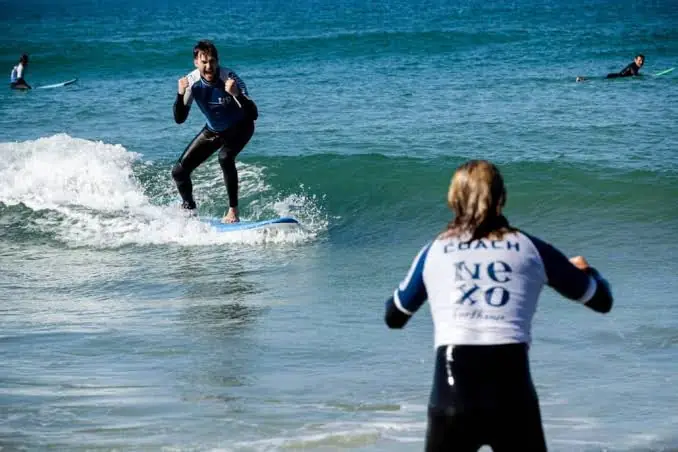
Superior camps shorten this cycle by utilizing real-time radio telemetry or immediate beach-side video review, replacing end-of-day debriefs with actionable, real-time corrections.
3. Cognitive Load Isolation Model
Developing surfers face cognitive overload when managing paddling technique, wave timing, balance, and ocean safety simultaneously. Effective camps systematically isolate variables:
-
Phase 1 (Dry Land): Master stance width, pop-up mechanics, and center-of-mass alignment on stable ground.
-
Phase 2 (Controlled Water Entry): Execute take-offs on gentle, waist-deep white water waves with instructor support.
-
Phase 3 (Open Lineup Navigation): Integrate independent paddling, current management, and etiquette rules in open water.
Key Categories and Operational Variations
Surf camps worldwide fall into six primary operational categories, each serving distinct budget levels, physical demands, and skill objectives.
1. All-Inclusive Coaching Academies
Dedicated athletic facilities focusing heavily on structured video motion capture, land simulation, and daily ocean coaching.
-
Strengths: Rapid skill progression, professional coaching staff, structured video feedback loops.
-
Trade-offs: Intensive daily schedules, rigid group timetables, less emphasis on unstructured leisure.
2. Luxury Boutique Wave Resorts
High-end coastal estates offering private oceanfront villas, gourmet dining, and tailored one-on-one coaching options.
-
Strengths: High privacy levels, personalized schedules, superior culinary services, non-surfing wellness options.
-
Trade-offs: Significant financial investment, limited group social interaction.
3. Mobile Charter Expeditions
Charter vessels navigating remote island chains, accessing pristine breaks directly from deep water channels.
-
Strengths: Direct access to uncrowded waves, changing coastal scenery, unique maritime travel experience.
-
Trade-offs: Confined living spaces, potential seasickness, limited non-water activities, high skill entry requirements.
4. Eco-Lodge Wave Sanctuaries
Secluded lodges located in remote coastal regions, prioritizing environmental sustainability, quiet surroundings, and uncrowded local breaks.
-
Strengths: Uncrowded wave access, peaceful atmosphere, strong connection to local ecology.
-
Trade-offs: Basic infrastructure, limited medical proximity, variable transport logistics.
5. Multi-Sport Coastal Wellness Retreats
Facilities combining surf instruction with daily yoga, functional fitness training, spa therapies, and holistic culinary programs.
-
Strengths: Balanced daily schedules, ideal for non-surfing companions, strong focus on physical recovery.
-
Trade-offs: Less technical wave coaching, split focus across multiple physical disciplines.
6. Inland Wave Basin Academies
Modern training facilities built around mechanical wave pools, providing completely controlled freshwater wave environments.
-
Strengths: Perfect wave consistency, zero ocean current distractions, optimal video capture angles.
-
Trade-offs: Synthetic environment, higher hourly pool rates, lacks open-ocean navigation training.
Program Category Matrix
Detailed Real-World Scenarios
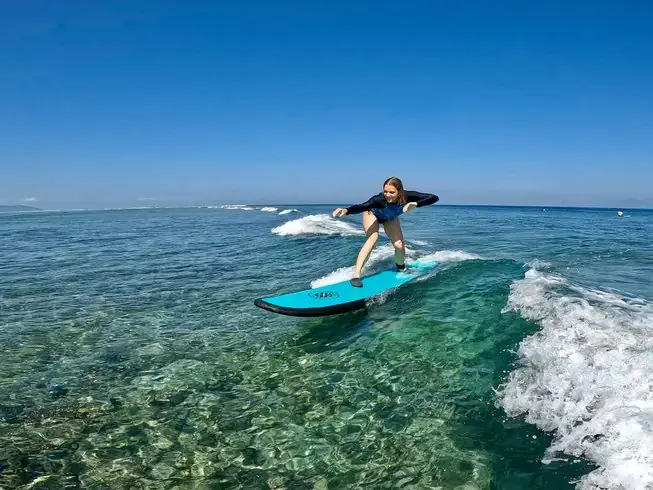
Scenario A: The Stagnant Intermediate Surfer
A surfer with two years of self-taught experience struggles to generate speed down the line and execute functional rail turns.
The optimal choice is an all-inclusive coaching academy featuring daily video analysis. High-speed video review identifies a narrow stance and backward weight bias.
Land-based surf-skate drills recondition body movement before the student returns to the ocean with radio helmet guidance.
Scenario B: The Beginner Seeking Safety
A first-time student with mild ocean anxiety desires a safe, controlled environment to learn fundamental balance mechanics.
Controlled Wave Basins
The student selects an inland wave basin academy or a luxury boutique resort located on a sheltered, shallow cove. Initial water instruction occurs in waist-deep water without strong currents.
Guided Flotation Support
The instructor maintains physical contact with the board tail, building student confidence before introducing independent wave paddling.
Planning, Cost, and Resource Dynamics
Evaluating options requires assessing direct tuition costs, rental fees, transfer logistics, and hidden trade-offs.
Financial Investment Framework
Physical Conditioning Strategy
Guests should initiate paddle-specific endurance and mobility training four to six weeks prior to arrival. Pre-trip conditioning prevents early muscle fatigue and reduces wipeout risks.
Equipment Customization
Confirm that candidate facilities maintain diverse surfboard inventories tailored to varying body weights, height profiles, and wave conditions.
Tools, Strategies, and Support Systems
Modern instructional facilities rely on advanced equipment, diagnostic software, and safety hardware to optimize learning and maintain high safety standards.
-
High-Frame-Rate Video Capture: Land and water cameras recording at high frame rates allow coaches to analyze body mechanics, foot placement, and weight distribution during post-surf debriefs.
-
Two-Way Radio Helmets: Instructors deliver immediate verbal coaching cues while guests ride waves, accelerating muscle memory corrections in real time.
-
Custom Surf-Skate Simulators: Carving skateboards with moveable front trucks replicate surfboard rail movement on dry land, helping guests practice body mechanics before entering the water.
-
Jet Ski Watercraft Support: Personal watercraft provide fast transport to outer wave breaks, assist during unexpected currents, and offer swift ocean rescue capabilities.
-
High-Density Foam Training Craft: Soft-top surfboards equipped with flexible fins provide high flotation, stability, and impact protection during early learning phases.
-
Low-Altitude Aerial Drones: Drones capture overhead footage, offering unique perspectives on lineup positioning, wave reading accuracy, and turn trajectories.
Risk Landscape and Failure Modes
Ocean instruction carries inherent environmental hazards, physical risks, and instructional failure modes that demand systematic risk management.
Compounding Risk Drivers
Primary risk variables can compound rapidly in coastal environments:
-
Fatigue-Induced Panic: Physical exhaustion combined with strong offshore currents can trigger panic in inexperienced swimmers, escalating minor drift into rescue situations.
-
Instructional Overload: Instructors who deliver too many technical cues simultaneously cause cognitive paralysis, leading to awkward wipeouts and board loss.
-
Improper Lineup Selection: Placing beginner students in crowded or heavy wave lineups increases the risk of board collisions with other surfers.
Governance, Maintenance, and Long-Term Adaptation
Evaluating candidate facilities requires checking operating permits, staff credentials, and safety standards.
Operational Audit Checklist
Legal and Insurance Verification
Verify the facility holds valid commercial operating permits and comprehensive commercial liability insurance policies.
Instructor Credentials
Confirm staff hold recognized coaching certifications (e.g., ISA, USA Surfing) alongside CPR, First Aid, and Lifeguard credentials.
Equipment Maintenance Records
Inspect boards, wetsuits, and safety gear for wear, delamination, missing traction pads, or damaged fins.
Emergency Protocol Design
Ensure the school maintains written, location-specific emergency protocols with designated medical evacuation procedures.
Measurement, Tracking, and Evaluation
Assessing student progress requires tracking both quantitative performance metrics and qualitative movement indicators over time.
Performance Indicators
-
Pop-Up Execution Speed: Elapsed time from initial hands-on-deck placement to stable standing posture on the board.
-
Wave Catch Conversion Rate: The percentage of paddled-for waves successfully caught into clean rides.
-
Stance Width Consistency: Maintaining a stable stance with feet positioned over the board’s stringer and center of balance.
-
Ocean Awareness Score: Demonstrating independent ability to spot rip currents, evaluate wave sets, and navigate safely around other surfers.
Common Misconceptions and Oversimplifications
Myth 1: Famous Waves Provide the Best Learning
Popular wave destinations often feature heavy crowds, intense lineups, and dangerous reef conditions. Sheltered locations with diverse break options offer superior learning environments.
Myth 2: Smaller Boards Speed Up Progress
Undersized boards reduce flotation and paddle speed, dramatically lowering wave catch counts. High-volume boards provide the stability required to master balance mechanics efficiently.
Myth 3: Great Surfers Are Always Great Coaches
Athletic capability does not guarantee teaching ability. Top coaches possess diagnostic patience, clear communication skills, and structured pedagogical methodologies regardless of personal competition records.
Myth 4: One Week Guarantees Mastery
A single week builds foundational balance and safety awareness. Developing independent ocean literacy, wave reading skills, and lineup confidence requires sustained practice over time.
Ethical, Practical, or Contextual Considerations
Operating instructional camps in developing coastal regions carries social, environmental, and economic responsibilities.
Community Engagement and Employment
Top-tier facilities recruit and train local community members as coaches, boat captains, chefs, and hospitality managers. Offering fair wages, professional development, and year-round employment supports sustainable coastal tourism.
Environmental Stewardship
Responsible camps minimize environmental impact by eliminating single-use plastics, utilizing renewable energy, managing wastewater safely, and supporting local reef conservation projects. Educating guests on marine ecosystem protection ensures fragile coastal environments remain healthy.
Conclusion
Determining top surfing camp selections requires balancing structured sports coaching, safety infrastructure, private accommodations, and geographical fit. No single facility meets every student profile. Guests must evaluate candidate programs based on coaching methodology, instructor credentials, wave accessibility, and personal athletic goals.
By assessing candidate camps through pedagogical depth, risk management protocols, and overall hospitality quality, travelers can invest wisely in their athletic development. High-quality instruction, proper physical rest, and structured coaching transform wave riding into a safe, deeply rewarding, and lifelong athletic pursuit.