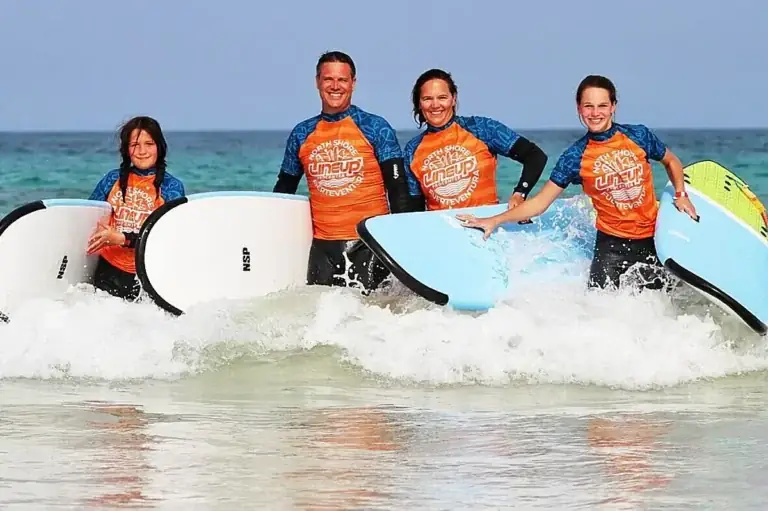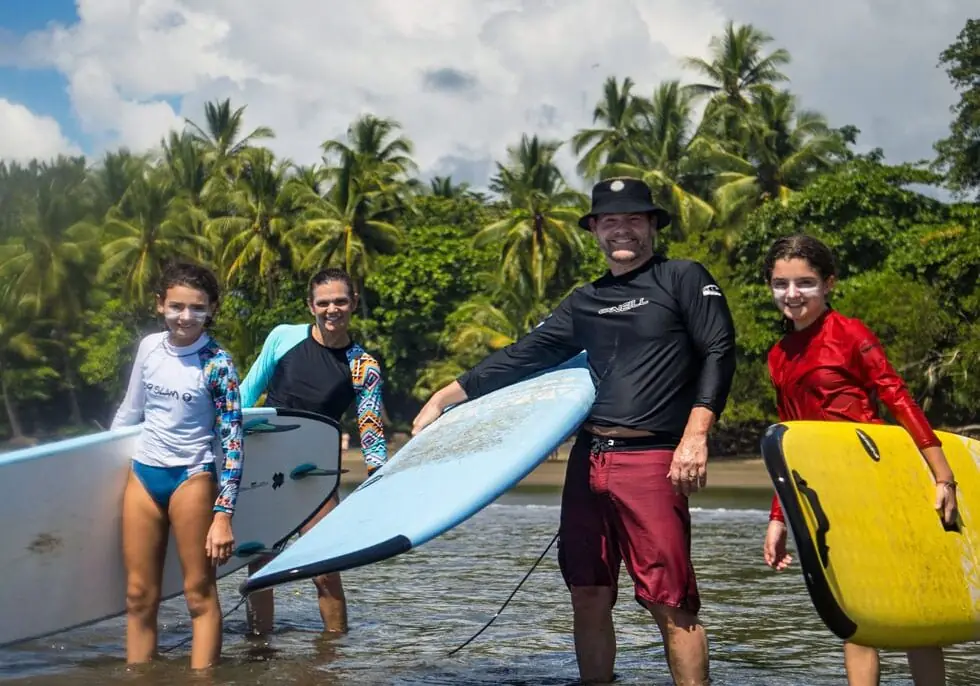
Best Surfing Camp for Families: Structural Criteria & Global Comparison
Selecting structured ocean travel for multi-generational groups presents a distinct set of operational challenges. While solo travelers or adult groups often prioritize raw swell exposure and nightlife, family units must balance safety, varied skill progression, age-appropriate amenities, and operational logistics. The commercial surf travel industry has rapidly expanded to accommodate these needs, evolving from basic surf shacks into multi-tier family resorts.
Evaluating these operations requires a firm understanding of how coastal bathymetry interacts with hospitality infrastructure. Local swell angles, tidal fluctuations, wind patterns, and seabed topography determine whether a surf break is suitable for a young child or an experienced adult. Simultaneously, student-to-instructor ratios, watercraft transport safety, childcare support, and medical accessibility govern the overall viability of a resort for family groups.
Navigating this competitive marketplace demands an objective analytical framework. Premium resort amenities and oceanfront dining cannot make up for poor water safety management or unsuitable surf conditions. This comprehensive guide breaks down global family surf travel structures to help travelers make informed decisions based on safety, athletic progress, and overall value.
Understanding “best surfing camp for families”
Evaluating the best surfing camp for families requires analyzing how physical coastal geography interfaces with multi-generational hospitality services. A complete family package integrates multi-room accommodations, flexible land or water transport, tailored meal plans, age-segmented gear fleets, guided wave access, and accredited coaching into a cohesive operational model.
The Multi-Generational Operational Matrix
Travelers often make reservation decisions based on surface-level visual marketing or simple location proximity. However, a high-value family operation maintains an equilibrium across three essential pillars: safe wave mechanics, specialized youth instruction, and comprehensive resort infrastructure.
Ocean Suitability Across Age Groups
A common error involves assuming that any beach resort with an adjacent surf school can accommodate young children and adults equally well. A break characterized by fast-moving shorebreak or heavy currents creates severe safety hazards for younger surfers, regardless of the instructor’s enthusiasm.
Balancing Athletic Goals and Family Leisure
Family surf travel operates along a spectrum anchored by pure athletic development on one end and passive resort relaxation on the other. Performance-oriented academies enforce strict schedules dictated by tide charts and wind shifts. Hospitality-centric resorts prioritize flexible itineraries, swimming pools, and wellness amenities. Clarifying family priorities before booking prevents operational friction during the trip.
Instructional Adaptation for Younger Athletes
Teaching children requires fundamentally different methodologies than coaching adults. Young surfers need small student-to-instructor ratios, lightweight equipment, shallow-water instruction, and gamified skill progression. Resorts that simply group children into adult coaching cohorts fail to provide effective or safe instruction.
Deep Contextual Background
Evolution of Commercial Family Surf Travel
Commercial surf travel originated as informal expeditions undertaken by independent surfers during the mid-twentieth century. These early travelers navigated coastal routes across Mexico, Europe, and Southeast Asia with basic camping equipment.
Accommodations were minimal, relying on simple coastal campsites or local homestays. Wave access depended entirely on manual weather interpretation, basic paper charts, and personal trial-and-error exploration.
By the late 1990s, dedicated surf camps emerged in destinations like Costa Rica, Portugal, and Indonesia. These operations provided structured transport and communal living spaces, but catered primarily to young, single travelers.
Over the past two decades, as early generations of surfers started families, demand shifted toward higher-end accommodations. Operators responded by developing specialized resorts featuring family suites, certified childcare, and tailored instruction for all age groups.
Coastal Dynamics and Oceanographic Safety
Ocean swells travel across open ocean basins before interacting with shallow coastal shelf features. The shape, speed, and safety of breaking waves depend on deep-water swell periods, seabed contours, and wind exposure.
Coastal destinations vary widely in their suitability for family travel. Protected sandbar bays offer soft, forgiving waves ideal for beginners, while exposed reef passes generate fast, heavy waves suitable only for advanced surfers.
Regulatory Standards and Water Safety Certifications
Modern operators navigate complex regulatory frameworks governing commercial water sports and hospitality. Maritime safety authorities, municipal zoning boards, and tourism ministries enforce rules regarding commercial watercraft usage, building codes, and environmental impact.
Leading family surf camps employ instructors certified by internationally recognized bodies such as the International Surfing Association (ISA) or national lifeguard organizations. These certifications ensure staff are trained in ocean rescue, CPR, first aid, and structured sports pedagogy.
Conceptual Frameworks and Mental Models
The Family Operational Friction Model
This framework evaluates the operational efficiency of managing daily logistics for a family group at a surf resort.
High operational friction leads to fatigue and stress, particularly for families traveling with young children. A resort requiring long van rides and complex equipment transfers consumes significant time and energy.
Conversely, a facility located directly on a sheltered beach with an on-site gear locker allows family members to move seamlessly between their rooms and the water.
The Multi-Tiered Wave Environment Matrix
Matching family members of varying skill levels with appropriate wave conditions is essential for safety and progression.
Shallow Sandbar Lagoons
Gentle, slow-moving white-water rolling over flat sand beds. This environment allows young children and absolute beginners to build confidence without fear of deep water or heavy currents.
Predictable Point and Beach Breaks
Long, peeling green waves breaking alongside clear paddling channels. This setup provides intermediate surfers with manageable rides and straightforward entries and exits.
Exposed Outer Reef Breaks
Powerful, fast waves breaking over shallow coral or rock substrates. These breaks demand advanced wave-reading abilities, precise pop-ups, and confident duck-diving skills.
The Multi-Generational Value Index
Evaluating a resort’s overall value requires balancing athletic instruction quality with non-surfing amenities that keep non-surfing family members engaged throughout the stay.
Packages that incorporate complementary activities—such as yoga classes, eco-tours, swimming pools, and cultural excursions—ensure all family members enjoy a fulfilling vacation regardless of their time spent in the ocean.
Key Categories of Global Family Surf Camps
Selecting an ideal facility requires comparing operational models across distinct global categories.
Full-Service Coastal Resorts
Located in tropical destinations like Costa Rica, the Maldives, and Bali, these resorts combine high-end accommodations with direct ocean access. They feature multi-bedroom villas, swimming pools, on-site restaurants, and dedicated watercraft fleets.
These operations provide tailored instruction for children alongside guided boat trips to outer breaks for experienced parents. While offering high convenience, they represent a higher financial investment.
Progressive Coaching Academies
Coaching academies prioritize skill development over passive leisure. Operations in Portugal, France, and Australia structure their daily itineraries around tidal movements and video analysis workshops.
Instructors utilize land-based cameras to capture video footage of morning sessions, reviewing movement mechanics during afternoon workshops. These facilities are well-suited for families focused on measurable athletic improvement.
Inland Wave Park Resorts
Inland wave parks represent a growing segment of family surf travel. Located in regions like Texas, the United Kingdom, and Abu Dhabi, these facilities utilize mechanical wave generators to produce consistent waves in controlled lagoon settings.
They eliminate ocean hazards like strong currents, marine life, and unpredictable swell gaps. This controlled environment makes them exceptionally effective for rapid technical skill development across all age groups.
Detailed Real-World Scenarios
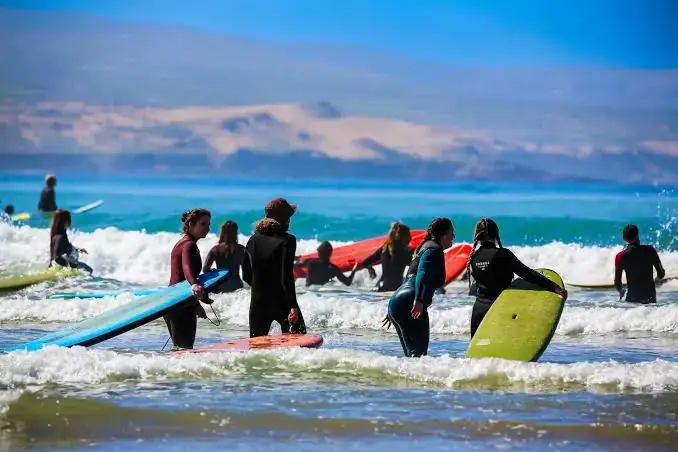
Scenario 1: The Multi-Skill Family Unit
A family of four includes two absolute beginner children, an intermediate mother, and an advanced father seeking challenging waves.
-
Primary Constraint: Divergent skill levels requiring completely different wave environments simultaneously.
-
Strategic Decision: Choose a full-service resort situated near a calm bay with access to nearby boat-accessible reef breaks.
-
Execution: Children and mother take shallow-water lessons in the bay, while the father takes an early morning boat to outer breaks.
-
Failure Mode: Booking a remote camp situated exclusively in front of a heavy reef break, leaving beginners unable to surf.
Scenario 2: The Working Parent with Young Children
A parent needs to balance remote work commitments with family surfing lessons and childcare for a four-year-old child.
-
Primary Constraint: Managing professional obligations alongside family leisure and youth supervision.
-
Strategic Decision: Book an all-inclusive resort offering high-speed internet, on-site childcare, and flexible lesson scheduling.
-
Execution: The parent works during morning hours while the child attends supervised kids’ club activities, followed by family surf sessions in the afternoon.
-
Second-Order Effect: Eliminates parental burnout while providing structured entertainment for younger children.
Scenario 3: The Short-Duration Athletic Trip
A family with teenage surfers has one week of vacation and wants to maximize wave riding time without dealing with long travel logistics or potential flat swell windows.
-
Primary Constraint: Tight time limits and zero tolerance for unpredictable ocean conditions.
-
Strategic Decision: Book a five-day intensive coaching package at a modern inland wave park resort.
-
Execution: Ride dozens of mechanical, perfectly shaped waves per session with immediate coaching feedback between rides.
-
Failure Mode: Traveling to a remote ocean break during a seasonal swell slump, resulting in days of unusable ocean conditions.
Planning, Cost, and Resource Dynamics
Evaluating family surf packages requires analyzing direct costs, operational inclusions, and potential hidden expenses.
Unbundling Package Price Structures
Analyzing package pricing structures prevents unexpected expenses during a trip. Lower-cost packages often advertise low base rates, but charge extra for gear rentals, airport transfers, media files, childcare, and daily boat runs.
Higher-end family packages bundle accommodations, all meals, gear usage, coaching, media files, and transport into a single transparent rate.
Seasonal Pricing and Weather Considerations
Family surf resorts adjust pricing based on regional climate and swell seasons. High swell months often align with dry weather seasons, driving package rates up.
Booking during shoulder seasons yields lower prices and smaller group sizes. However, shoulder months can bring variable wind patterns and occasional rain showers.
Tools, Strategies, and Support Systems
Planning a family surf trip involves using modern digital forecasting platforms alongside physical preparation strategies.
Ocean Forecasting Applications
Modern travel planning relies on satellite buoy telemetry, atmospheric wind models, and wave prediction applications.
Understanding how long-period ocean swells interact with local coastal shelf geography enables families to evaluate operator claims regarding wave suitability.
Equipment Fleet Quality and Adaptation
High-quality family camps maintain diverse, well-serviced surfboard fleets. Having access to soft-top boards in various sizes, mid-lengths, and shortboards ensures family members can use equipment suited to their size and skill level.
Pre-Departure Preparation Checklist
Following a structured preparation timeline ensures family members arrive with adequate physical fitness and mental readiness:
Phase 1: Physical Preparation
Perform four weeks of basic swimming drills, upper-body paddling exercises, and core stability work for all participating family members.
Phase 2: Gear Verification
Inspect personal rashguards, wetsuits, tropical reef booties, sun protection gear, and prescription eyewear.
Phase 3: Medical and Travel Logistics
Verify travel insurance coverage for water sports activities, check destination vaccination recommendations, and pack personal first-aid supplies.
Phase 4: Skill Goal Setting
Establish realistic technical goals for each family member and share them with the resort’s instructional team prior to arrival.
Risk Landscape and Failure Modes
Overestimating Skill and Physical Fitness
A major operational failure mode occurs when family members misjudge their swimming capabilities or ocean experience, booking packages above their level.
An inexperienced surfer attempting to ride heavy reef breaks risks physical injury, equipment damage, and extreme mental anxiety.
Accurate self-assessment ensures families select programs matched to their actual physical capabilities.
Environmental Hazards in Tropical Destinations
Tropical coastal areas present physical hazards including sharp coral reefs, strong tidal currents, sea urchins, and intense sun exposure.
Top-tier family operators maintain comprehensive first-aid supplies, certified lifeguard personnel, satellite communication systems, and established medical evacuation protocols.
Unaccredited and Unlicensed Operators
The surf travel market includes unpermitted operators lacking commercial licensing, adequate liability insurance, or certified water safety personnel.
Booking unaccredited operators exposes family groups to financial risk, compromised safety standards, and limited legal recourse in the event of an accident.
Governance, Maintenance, and Long-Term Adaptation
Post-Camp Skill Retention Systems
Sustaining athletic improvement after returning home requires keeping a detailed technical training log. Surfers should record coaching cues, surfboard dimensions, wave types, and video review notes.
Reviewing these records before home surf sessions locks in correct technique and prevents sliding back into flawed movement habits.
Monitoring Coastal Conservation Standards
Environmental regulations and local tourism policies change continuously across popular coastal regions.
Tracking changes in local marine park rules, crowd-control policies, and coastal development plans helps families select responsible operators who actively protect local marine ecosystems.
Measurement, Tracking, and Evaluation
Evaluating the success of a family surf camp experience involves tracking quantitative performance metrics alongside qualitative personal milestones.
Quantitative Metrics
-
Unassisted Wave Catch Rate: The percentage of paddled waves caught cleanly without physical assistance from an instructor.
-
Session Duration: Total productive hours spent paddling and catching waves per day without severe physical exhaustion.
-
Turn Completion Percentage: The ratio of successfully completed functional turns relative to total waves caught on video.
Qualitative Signals
-
Ocean Reading Autonomy: Demonstrating the ability to read incoming sets, position correctly, and avoid closing-out sections independently.
-
Ocean Composure: Maintaining calm breathing patterns and clear spatial awareness in crowded or challenging wave conditions.
Common Misconceptions and Oversimplifications
Myth 1: Any Beachfront Resort Is Suitable for Family Surfing
Travelers often assume that any luxury beachfront resort offers good surfing conditions for children.
In reality, many luxury resorts are located in front of heavy shorebreaks, deep channels, or sharp coral reefs that are dangerous for novice surfers. Safe family surfing requires sheltered, shallow sandbar environments.
Myth 2: Children Can Be Coached Using Adult Techniques
Many assume children learn surfing using the same instructional methods as adults.
However, children require smaller student-to-instructor ratios, lighter equipment, shallow-water lessons, and gamified skill progression to learn safely and effectively.
Myth 3: Video Analysis Is Only Useful for Advanced Surfers
Beginner and intermediate surfers frequently skip video coaching, assuming motion capture is reserved for elite competitive athletes.
In truth, video review benefits developing surfers immensely, quickly exposing stance errors, improper eye focus, and pop-up timing issues that are impossible to feel while riding a wave.
Ethical, Practical, and Contextual Considerations
Participating in global surf travel carries ethical responsibilities toward local host communities and delicate coastal environments.
Unmanaged tourism can strain local infrastructure, generate waste in remote regions, and crowd out local residents from their regional breaks.
Responsible families select operators who employ local staff at fair wages, support community initiatives, eliminate single-use plastics, and respect local lineup etiquette.
Choosing conscious operators preserves these world-class coastal environments for future generations.
Conclusion
Finding the best surfing camp for families requires aligning personal athletic goals with accurate ocean geography, structured coaching, robust safety protocols, and age-appropriate resort amenities. Global surf travel offers diverse options ranging from tropical coastal resorts to high-tech inland wave parks.
By prioritizing accredited water safety, low student-to-instructor ratios, daily video analysis, transparent pricing, and environmentally responsible operations over superficial luxury perks, families secure a high return on their investment. Selecting a well-managed camp delivers real skill progression, lasting ocean confidence, and unforgettable shared family experiences.